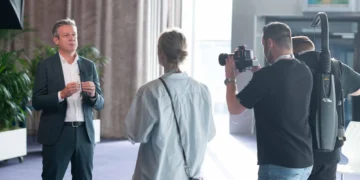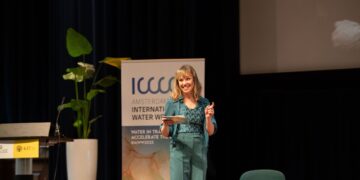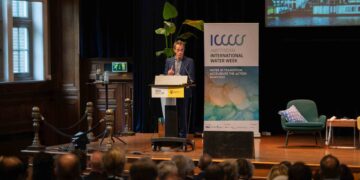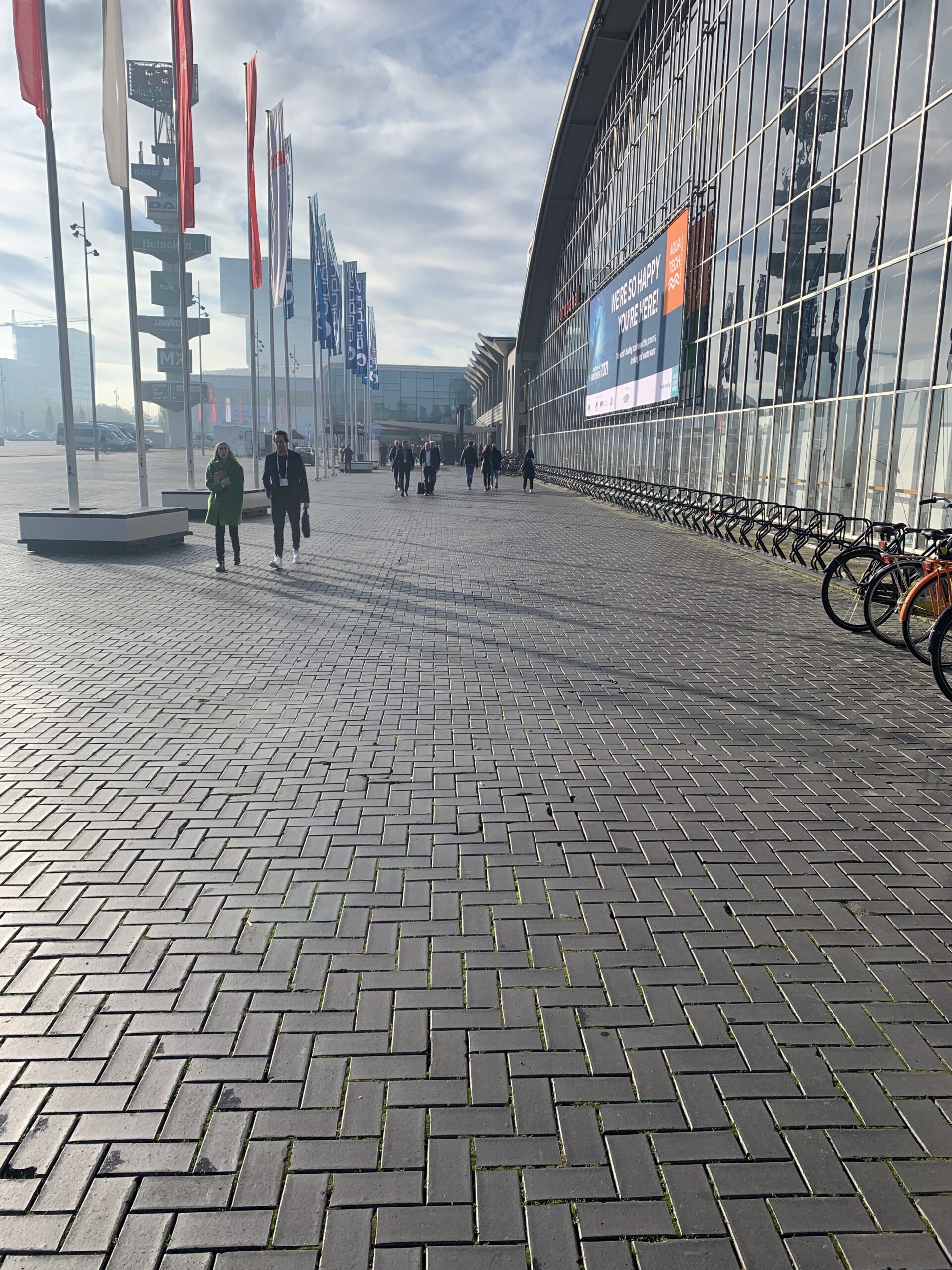
At 9:00am CET this morning, the AIWW2021 In-Person Conference started. We were very happy to finally meet so many of you in real life again.
Our programme today:

Summary
After the plenary keynote by dr. Gesche Grützmacher, session 1 ‘Resource recovery and wastewater treatment technology’ showed us research results about and implementation of novel treatment technologies as alternatives to recover of resources from wastewater treatment and drinking water production:
- Innovation for more efficient iron removal systems from groundwater for sludge reuse
- Recovery nutrients from black water for fertilizing
- Implementation of ZLD system for the reuse of waste water from industry for drinking waterThese cases illustrate the efforts in the sector to move to circularity and water conservation. Challenges:
- The energy requirement of the novel technology: There is still the need to look for alternatives to reduce their energy footprint.
- In the industry every plant produces different quality of water.
Session2: Waste, energy production and emission
Three examples from the Netherlands and Germany with different approaches on how the water and industry sector are contributing to the global sustainable goals through the implementation of technological innovation. The aim is transitioning towards reducing footprint (reducing greenhouses gases and energy efficiency) in the industry and the water sector and leading out to circularity and new business opportunities. From:
- updating wastewater infrastructure, from mechanical into sustainable modern biological WWTP, toward more sustainable operations
- implementing technology for fat -recovery from industrial wastewater for on-site biofuel production
- integrating adaptation and mitigation perspectives to the decision-making process through the calculation of typical structures of the urban drainage system footprint
Session 3 & 4. Saline Water and Food Systems & Additional drinking water sources and circular economy.
We had an interesting discussion on how is next to scaling up solutions/trends in saline water for food production and freshwater production. Research and pilots in different locations of the world have been carried out, we have the technology and it works. So, what are the barriers to implementation? There is not a simple answer, however, there is a need for an integrated collaboration approach, linking science practice and initiatives with stakeholders from different sectors. We need to put attention to the governance aspects for the implementation of these innovative solutions.
Innovations are also present in decision-making processes; serious games offer a tool to support collaborative decision-making toward more circular economy practices in the water sector. It was highlighted that, the local context must be considered, different levels of salinity, social context, and needs required different strategies.
Challenge: Regarding desalination technology for freshwater production, the aim is to produce an alternative source of freshwater through the desalination of groundwater. However, the use of this technology for drinking water use has to main limitation: first the volume of fresh water produced is limited to ecological water table levels, second: the location where the process is carried out should be close to the utility facility.
Session 5: Scaling innovative sanitation solutions
How can we find scaleable solutions for sanitation challenges? This was one of the main questions of this discussion. A repeated word to address this question was Partnership. Sanitation innovations are not well financed and there is little support for product designers on their journey.
Scaling innovation solutions require support to fill the gap in finance and capacity building. A great effort to change this reality is the Sarphati Sanitation Challenge, 2021 winner AKYAS received 100K to get their onsite sanitation treatment to the next level.
There is the need to look at the multiple dimensions of sanitation issues (gender, social, environmental, cultural, et cetera) and promote collaboration and leaning exchange among utilities, private, public, and sector to look for scalable business models.
Other insights from the speakers:
- there are already developing ideas to combine all the sectors with regional and local representation to carry forward the work already done. The challenge to find doable opportunities within the finance world
- we need to think about cost recovery and how can we engage with people to share the costs and in ways and means to engage with public
Integrated Leaders Forum
After a wonderful day at RAI Amsterdam, we moved to the Hermitage Amsterdam, for the Integrated Leaders Forum. Here, leaders from industries, cities and utilities met to finalize the AIWW2021 statement and the according Action Agenda’s. Deputy mayor of Amsterdam Egbert de Vries opened the meeting; Delta commissionary Peter Glas followed with his inspirational speech, stressing out water is the connecting element of all the aspects of our environment.
November 4th
Please have a look at our programme for tomorrow

Looking forward meeting you!