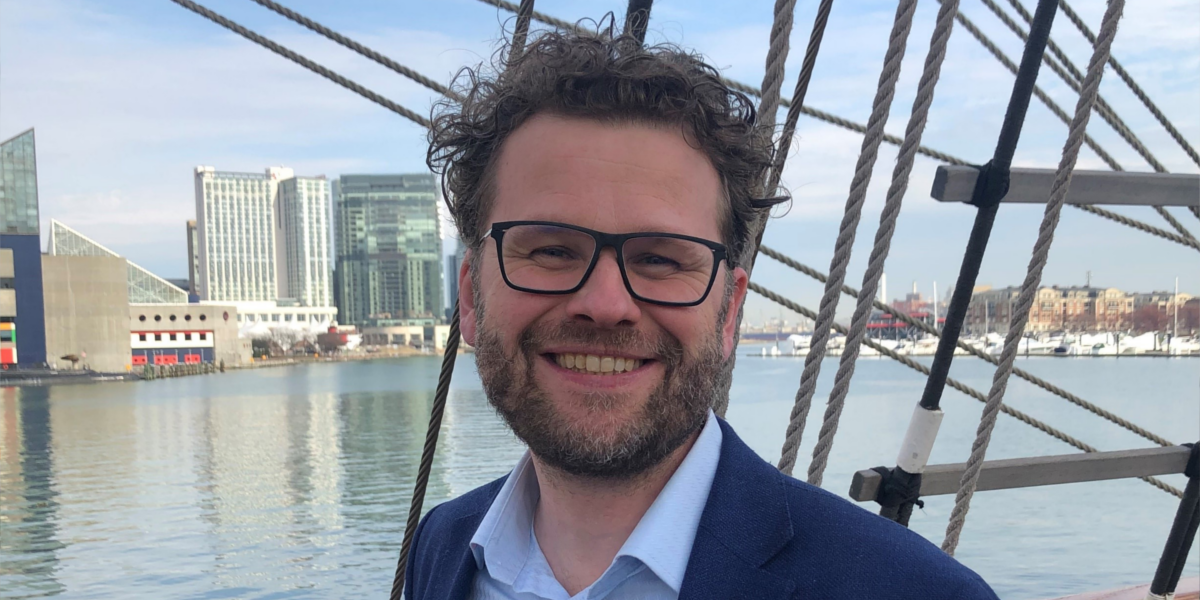
‘Water Solutions #3: Risks & Resilience’ is our third webinar, taking place on May 28th. Edgar Westerhof, Arcadis’ National Director for Flood Risk and Resiliency North America, is one of the speakers at this webinar. Edgar helped initiate the BIG U study to protect Manhattan from future storm surges and worked on the East Side Coastal Resiliency Project, aiming to protect 4 kilometers of New York’s financial center Manhattan against floods, with dikes and flood gates.
The East Side Coastal Resiliency (ESCR) Project is a coastal protection initiative, jointly funded by the City of New York and the federal government, aimed at reducing flood risk due to coastal storms and sea level rise on Manhattan’s East Side from East 25th Street to Montgomery Street. The boundaries of this project correspond with the natural ‘pinch-points’ in the 100-year floodplain: areas where the land is higher along the coastline, making it easier to close the system off from water entering from the north and south. The project design integrates flood protection into the community fabric, improving waterfront open spaces and access, rather than walling off the neighborhood. Construction on the East Side Coastal Resiliency project began in Fall 2020 and will continue through 2025.
Edgar: “The first phase was conceived six years ago. Given the complexity, we have worked extensively with stakeholder to get to this point. We are now at the stage of execution of our plan, cleaning up the existing interior first where needed. The sports fields, the trees, the roads and other infrastructure. This will make way for the implementation of the actual elevated flood protection works, such as berms and gates and other technical elements, like underground pipes and new upgraded park and community features. . The emphasis is usually on what you can see above the ground – like the elevated park landscape and dikes, for example – but a lot has to be done underground. That is where the major investment goes, it’s the most important part of the research we have done. However, a key project aspect is related to the local community. The project runs along the river at East River Park. That is a beautiful park, built 80 years ago that will have to be rebuilt to accomodate the new resilience features and amenities.
What can you say about the stakeholder perspective and reception to the plan?
“On the one hand, the city, the businesses and community really wanted to be protected. In Hurricane Sandy, they saw six feet of water around their homes and businesses, so they know that a future hurricane of that class under future Sea Level Rise, can be worse. The city wanted to provide protection in such a way that the new space also matches how they want to use the space under normal circumstances. The entire programming around it, is about giving a function to that space, that is something that takes up significant time and also budget but it is vital for the future success of the work. You could likely make a sort of fifty-fifty split , where half of the money actually goes to protection and half to open space improvements . That’s why it took considerable amount of time to come to this plan.
The eyes of the US and other global metropolitan centers are often on New York City and Manhattan. It sometimes feels everyone is watching this project, as it sets an example for cities facing similar problems. With the Black Lives Matter movement in 2020 and climate equity related topics prominently on the cities agenda, New York and the US is closely following the developments and so will the rest of the world:it is very important for the city and for Arcadis that we do this right. .
Cities like New York, Boston, Miami and San Francisco may have more opportunity to fund massive projects like this – but what about smaller cities and municipalities?
“With adaptation we seem to focus on bigger cities, but there are so many towns and villages with the same risks, but with smaller budgets and less capacity. Smaller communities in coastal and inland areas often lack the resources or access to financing or federal funding needed to develop resilience strategies. Large and small communities alike face increasing flood risk in many regions due to storms, heavy rainfall, and other weather events. This makes the need for sustainable and robust planning all the more imperative. Many of them have to deal with a dense network, with many stakeholders. Some of them don’t have a plan, don’t know how to control these risks and manage the potential impact, let alone, where and how to start the resilience planning process. Every year the US is exposed to extreme climate related weather events such as hurricanes, extreme precipitation, drought and heat. While distaster reponse is well-organized, as a result of the coastly annual events, preparedness through pro-active planning is less imbedded in US society How to protect yourself against hazards when you live in a small community is a very prominent question. We are often asked: where to start and how to build logically from the start to make projects happen? That’s one of the reasons why Arcadis developed the Adaptation for All Guide, addressing the problems and offering solutions. The Adaptation for All guide indicates how you should interpret your urban environment and how to respond.”
Can you tell us a bit more about this guide?
“We present this guide as a starting point for smaller community looking to determine which approach best suits their circumstances. We bring the lens of centuries of flooding expertise through best practices to shape approaches. There are lessons learned that any community can take from the examples outlined in this guide, and we hope that they serve as a springboard for local leaders looking to build a resilient and attractive future for their community.
About Edgar Westerhof
Edgar Westerhof is Arcadis’ National Director for Flood Risk and Resiliency for North America and Associate Vice President at Arcadis. Edgar is a water consultant with over 20 years of experience in urban water management. Edgar was leading the Arcadis participation in the international HUD Rebuild by Design competition, including the winning BIG U plan for the protection of Lower Manhattan. He functions as the climate change adaptation specialist regarding coastal and urban water management strategies and plays a key role in the identification and implementation of our local and international flood proofing expertise. He was the Rockefeller Foundation 100RC participation lead for the US and has given master classes on climate adaptation at UPenn, Yale University, Harvard, and Columbia. Edgar is the contributing author and technical editor of the book Blue Dunes (Columbia) and Adapting Cities to Sea Level Rise (Island Press).